

Insights from the Munich International Atherosclerosis Symposium 2025
From Mechanisms to Comorbidities
21.10.2025 – 22.10.2025
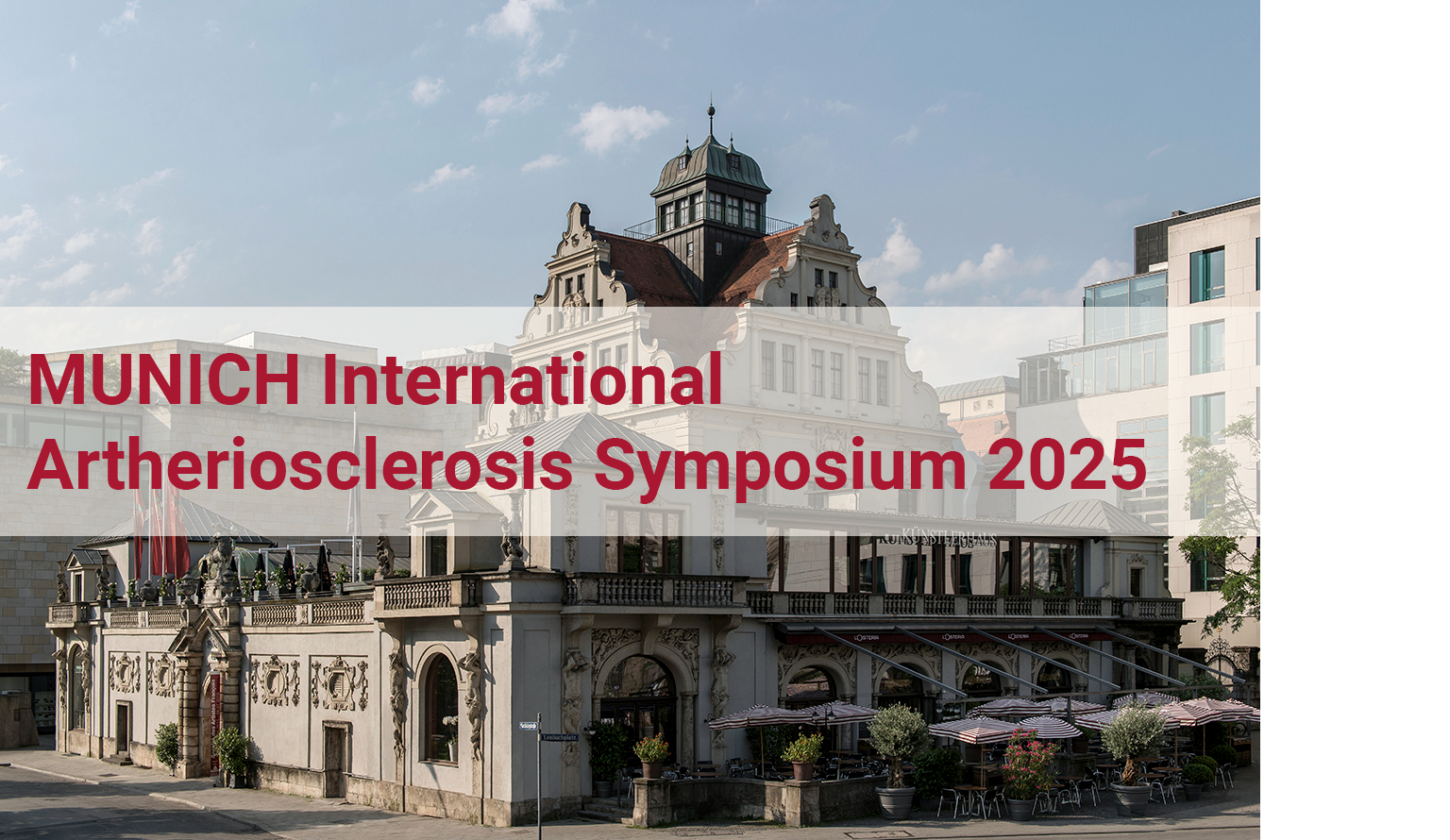
The Munich International Atherosclerosis Symposium 2025 (MIAS 2025), held from 21–22 October at the historic Künstlerhaus in Munich, concluded on a high note with strong turnout, animated discussions and promising research
directions emerging for the field of atherosclerosis.
Organized by the Collaborative Research Center 1123 (CRC1123), the symposium brought
together a distinguished international faculty of speakers, as well as the Editor of Nature Cardiovascular Research as a leading journal in the field.
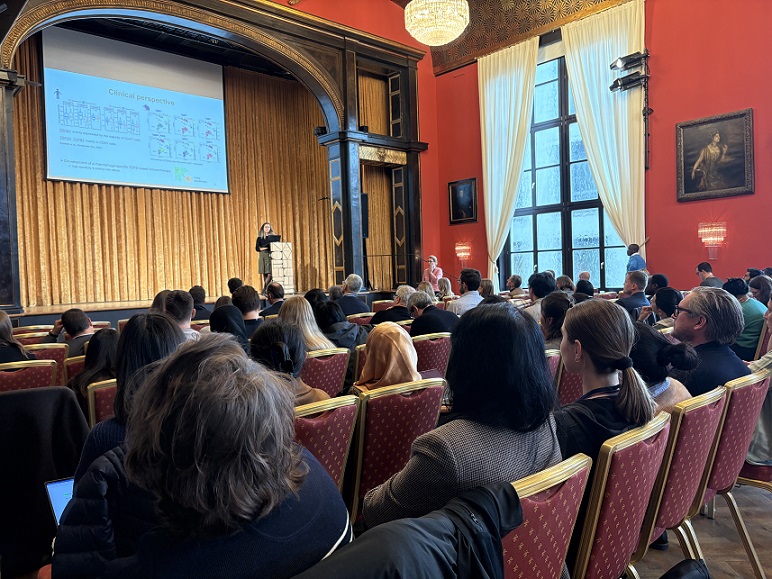
International expertise on display
Throughout the two-day meeting, co-organized by Institute Director Christian Weber, Sabine Steffens and Jürgen Bernhagen, researchers from Germany, France, Austria, the United States and the United Kingdom shared cutting-edge work on the interplay between cardiovascular disease and immunity, inflammation, metabolism and its comorbidities. This broad spectrum of topics reflects the translational ambitions in the fight against atherosclerosis and for cardiovascular health.
Editorial perspective adds depth
Another highlight of the symposium was the invited talk by Vesna Todorovic, Chief Editor of Nature Cardiovascular Research, published by Springer Nature Berlin, representing the editorial side of science publishing, offering attendees an insight into how top-tier cardiovascular science is reviewed, selected and shaped for publication.
Recognising young scientific talent
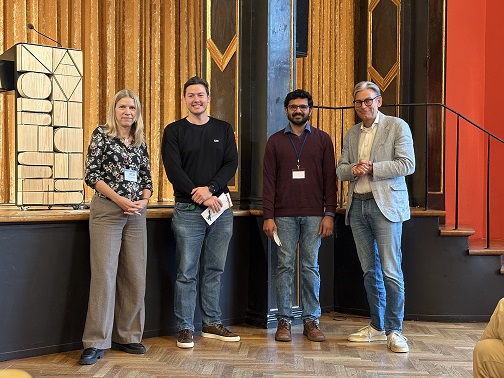
The Poster Prize was presented by Sabine Steffens and Christian Weber.
An especially inspiring moment came with the announcement of the poster awards, celebrating outstanding contributions from two early-career researchers. Simon Ebert, a PhD student from the Bernhagen Lab at the Institute for Stroke and Dementia Research (ISD) and Robby Zachariah-Tom, Post-Doctoral Researcher from the Hofmann Lab at the Helmholtz Institute Munich were honoured for their innovative and well-presented work, which impressed attendees for its potential scientific relevance.
Feedback from participants described high-quality talks, not only from well-established researchers, but also from up-coming young scientists and great networking opportunities; particularly valuable for early-career researchers engaging with global experts. On closing, the organisers reported that the symposium had met its objectives: stimulating dialogue between basic and clinical science, integrating international perspectives, and enhancing visibility of the atherosclerosis research community not only in Munich, but also in other parts of the world.
In short: MIAS 2025 brought leading international voices together, charting a course for future discovery in cardiovascular disease. The organisers and participants alike can count it as a resounding success.